Menu
our Memorandum of Understanding
Memorandum of Understanding
We help draft, notarize, and authenticate Memorandums of Understanding (MoUs), ensuring legal validity and clear terms for official and international use.
our services
Memorandum of Understanding (MoU) Services
A Memorandum of Understanding (MOU) is a formal document that outlines the mutual intentions, obligations, and expectations between two or more parties before entering a binding contract. At Justice Legal Translation, we provide reliable notarization services to ensure your MOUs are legally recognized, transparent, and properly documented for future reference and legal compliance.
MOUs are commonly used in business collaborations, partnership agreements, joint ventures, investment plans, and organizational cooperation. Our team ensures that each MOU is reviewed carefully to verify clarity, accuracy, and consistency, preventing misunderstandings and strengthening the foundation of any partnership.
- Legally recognized notarization for MOUs used in business, partnerships, and corporate agreements.
- Ensures identity verification, document clarity, and full legal compliance.
- Fast, confidential, and reliable service for smooth and secure documentation.
The notarization process includes identity verification of the involved parties, reviewing the document for legal sufficiency, and officially certifying the agreement with a notarial seal. This adds authenticity and credibility to the MOU, making it acceptable in legal settings, corporate procedures, and government submissions.
With our professional support, clients can confidently use their notarized MOUs to proceed with negotiations, finalize contracts, or maintain formal documentation of shared agreements. We ensure a smooth, secure, and confidential process that protects your interests and maintains legal integrity in all collaborative dealings.
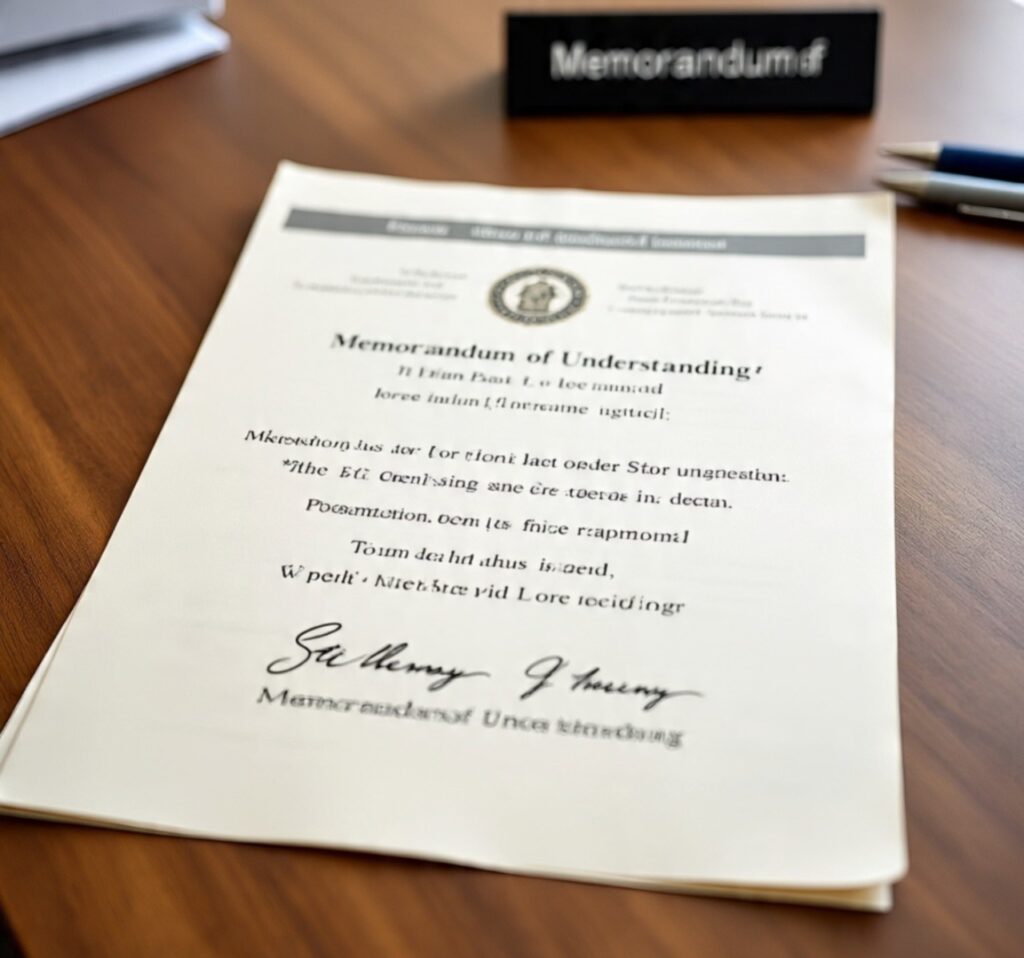
A Memorandum of Understanding (MoU) is a formal agreement between two or more parties outlining mutual intentions, responsibilities, and terms of cooperation. It serves as a written understanding before a legally binding contract is finalized.
Notarization verifies the identities of the signatories and confirms the authenticity of their signatures. This adds legal credibility and helps ensure the agreement is recognized by authorities and institutions.
Notarized MoUs are commonly required for business partnerships, joint ventures, project collaborations, property arrangements, and institutional or corporate agreements.
Yes, all signing parties must appear before the notary with valid identification so their identities and consent can be verified at the time of signing.
FAQ'S Corner
frequently asked questions


call us now!
Mobile: +971 526970478